Capital Sectors
Gandhinagar's Capital sectors form the planned heart of the city: a grid of numbered sectors, government buildings, and green belts.

Character of the zone
The Capital sectors are the core of Gandhinagar, a planned city designed in the mid-1960s by H. K. Mewada and Prakash M. Apte. The grid of 30 sectors is laid out with wide roads named after Gujarati alphabet letters and cross roads numbered from Ch-0 upwards. Green belts separate each sector, giving the city its reputation as one of India's greenest capitals. The layout is orderly and spacious, with residential blocks, government offices, and public buildings arranged in a logical pattern.
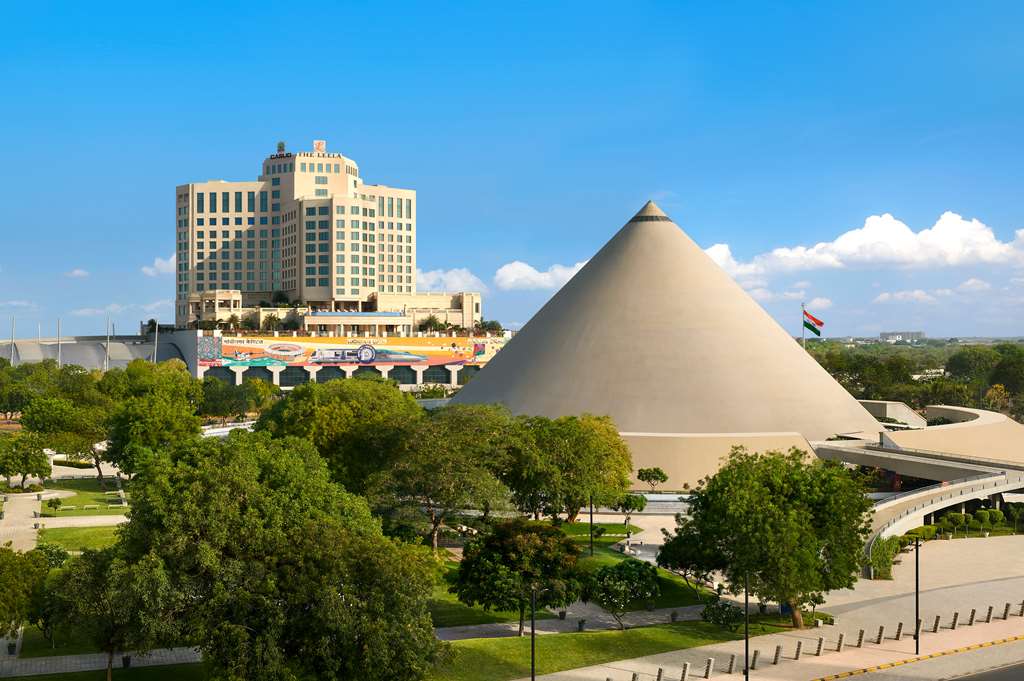
This zone contains the main civic and commercial hubs. Mahatma Mandir, the convention centre, hosts the Gujarat Global Summit in January. The old Secretariat building stands in Sector 16. Akshardham temple complex in Sector 20 draws visitors year-round. The sectors are mostly low-rise, with tree-lined avenues and parks. Traffic is lighter than in Ahmedabad, and the pace is calm outside peak hours.
Neighbourhoods in detail
Mahatma Mandir and Sector 13 form the southern end of the grid. This area is busiest during the Gujarat Global Summit, but quiet at other times. Dandi Kutir, a museum on Gandhi's life, stands beside the convention centre. Gandhinagar Capital railway station is nearby, with a hotel built above the tracks. The Ahmedabad Metro reaches Sector 1 and Mahatma Mandir stations; check the current service.
Sectors 16 and 17 are the old administrative centre. The Secretariat building and Sector 16 metro station are here. Market areas line the roads, with shops and eateries serving Gujarati thali, dhokla, and fafda-jalebi. Sector 11 and Ch Road form the commercial heart: offices, shops, and restaurants cluster along this main thoroughfare. Akshardham in Sector 20 anchors the eastern edge, with Punit Van and Sarita Udyan riverside gardens nearby. Sectors 24 to 30 are quieter northern residential areas with parks and wide streets.
- Mahatma Mandir and Sector 13: convention centre, Dandi Kutir museum, railway station.
- Sectors 16 and 17: old Secretariat, metro station, market areas.
- Sector 11 and Ch Road: commercial heart with offices, shops, restaurants.
- Akshardham, Sector 20: temple complex, riverside gardens, Punit Van.
- Sectors 24 to 30: quiet northern residential sectors with parks.
Getting around and distances
The Capital sectors are compact and walkable within each sector, but distances between sectors are best covered by auto-rickshaw, taxi, or bicycle. The Ahmedabad Metro connects Gandhinagar to Ahmedabad, with stations at Infocity, Sector 1, Sachivalaya, Akshardham, Sector 16, and Mahatma Mandir. A branch reaches GIFT City. Always check the current metro service before travel.
Gandhinagar Capital railway station is in Sector 13, with trains to Ahmedabad and other cities. The airport is about 18-20 km away in Ahmedabad. Roads are wide and well-maintained, and traffic is light. Buses run along the main roads, but frequency is limited. For short trips, walking between sectors through the green belts is pleasant.
Sights nearby
Dandi Kutir, beside Mahatma Mandir, is a museum dedicated to Gandhi's life and the Dandi March. Mahatma Mandir itself is a large convention centre with exhibition halls. Akshardham temple in Sector 20 is a pink sandstone Swaminarayan complex with gardens, exhibitions, and an evening show. Photography rules apply; check timings before visiting.
Punit Van and Sarita Udyan are riverside gardens on the Sabarmati, good for walks and picnics. Indroda Nature Park, on the river, has forest trails, a deer park, and a dinosaur fossil park. Adalaj stepwell, five storeys deep and completed in 1498, is a short drive away. The Trimandir temple is nearby. These sights are within easy reach of the Capital sectors.
- Dandi Kutir: museum on Gandhi's life beside Mahatma Mandir.
- Akshardham: pink sandstone temple complex with gardens and evening show.
- Punit Van and Sarita Udyan: riverside gardens for walks.
- Indroda Nature Park: forest trails, deer park, dinosaur fossil park.
- Adalaj stepwell: five-storey stepwell from 1498.
Who should stay here
The Capital sectors suit visitors who prefer a calm, planned environment over the chaos of a large city. They are ideal for those attending events at Mahatma Mandir, visiting Akshardham, or exploring Gandhi-related sites. Business travellers to GIFT City or government offices find the location convenient. The residential sectors offer quiet streets and parks, good for families or solo travellers.
The area is less suited to nightlife seekers; Gujarat is a dry state, and alcohol is only available in limited facilities at GIFT City (check current rules). Vegetarian food is the norm. The climate is best from November to February; summers are very hot. Most foreign visitors need an Indian visa; many can apply for an e-Visa online. Rules change, so check before travel.